


You may know her from her hit song So Easy (To Fall in Love). Twenty-six-year-old British singer-songwriter Olivia Dean is proving that Gen Z does, in fact, know how to make classic records.
Earlier this month, the Recording Academy echoed that sentiment, awarding Dean the 2026 Best New Artist honor, recognition that felt less like an introduction and more like a formal acknowledgment of work already in motion.
Long before industry validation, Dean got her start at the BRIT School for Performing Arts and Technology, the same institution that bred beloved singers Adele, Amy Winehouse, Leona Lewis, FKA Twigs, and Raye.
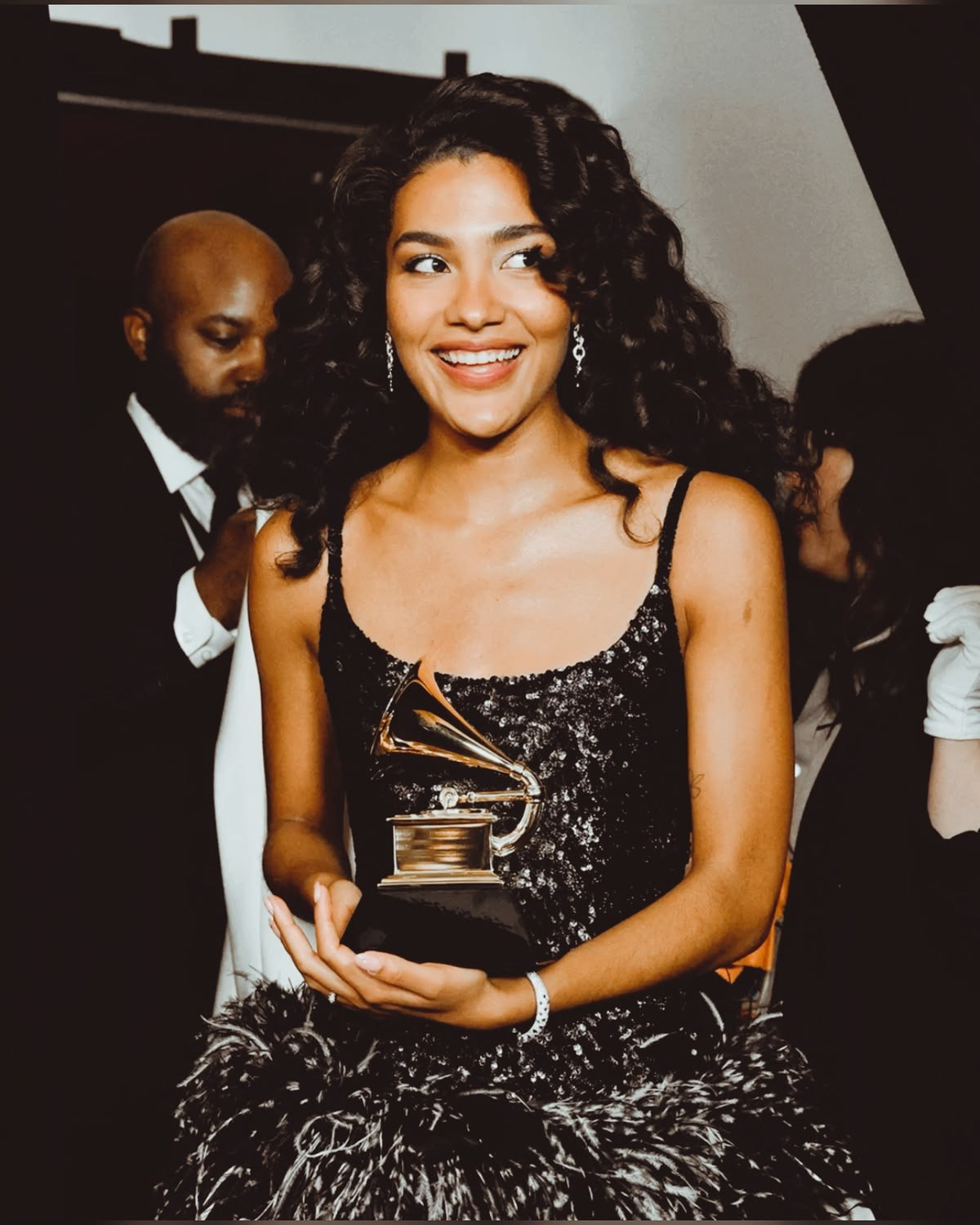
Soulful Sound from a GenZer
At the core of Olivia Dean’s music is restraint. Her soulful ballads are structured to prioritize longevity over immediate virality.
While Dean cites musical icons like Lauryn Hill and Aretha Franklin as some of her muses, she has developed her own unique sound and tone that makes all of her songs sound unmistakably Olivia.
Beyond her recognizably smooth tone, her point of view is uniquely her own. It’s the kind of authenticity Gen Z values but doesn’t always have the language to articulate. When it’s real, they can tell instantly, and are drawn in, following along just to hear that perspective.
What makes Dean’s point of view resonate across generations is that it resists the extremes that have come to define much of Gen Z music. Where the era has leaned either hyper-confessional to the point of exhaustion, or so emotionally detached it borders on irony, Olivia Dean occupies the space in between. Her writing is vulnerable without being exposed, confident without being cold.

For years, Gen Z music was written off as unserious; too online, too fleeting, too disconnected from the lineage of “classic” records. And in many ways, the critique wasn’t unfounded. The landscape shifted. We lost the plot. Even those of us making good music underground felt the gap between what was being celebrated and what would actually last.
Dean feels like a course correction.
Her music sounds more like us than the male-centered R&B of the ’90s and early 2000s that we grew up loving, but it carries the same emotional discipline. She speaks in a language Gen Z understands—self-aware, honest, intentional—without abandoning the structure and care that older listeners respect. That’s the balance. She makes music this generation loves, and music older generations can recognize as real.
That’s why her audience stretches beyond age brackets. Her songs don’t ask to be decoded or defended. They just ask to be felt, and that’s always been timeless.
Why This Matters
In a moment where music is often measured by speed, saturation, and shareability, Olivia Dean reminds us that longevity is still possible, and still worth striving for. Her success challenges the idea that Gen Z has abandoned craftsmanship or emotional discipline in favor of immediacy.
Dean doesn’t sound like the version of Gen Z music the internet learned to dismiss. She sounds like the version many of us know exists but rarely see centered: thoughtful, self-assured, emotionally literate. The kind of artist who understands that honesty doesn’t require spectacle, and that confidence doesn’t have to be loud to be convincing.
That distinction matters. Not just for how her music is received, but for what it signals about where the culture could be headed next. If Dean’s rise is any indication, the appetite for music that lasts—for records that respect both the listener and the lineage—hasn’t disappeared. It’s been waiting.
And now, it’s being heard.