

UnPRETTY Me, Please! Beauty isn't Worth the Liability
An inheritance of fear passed down as protection.

Pretty is treated as privilege until it becomes a liability. Then it’s treated like a provocation.
“Why did you tempt him?”
“What were you wearing?”
“Why didn’t you just leave?”
It always starts with a compliment, and oftentimes, we hope it ends there too. But as women, we know all too well that it doesn’t matter how covered we are, how many precautions we take, or how many times we say “no.”
They don’t care.
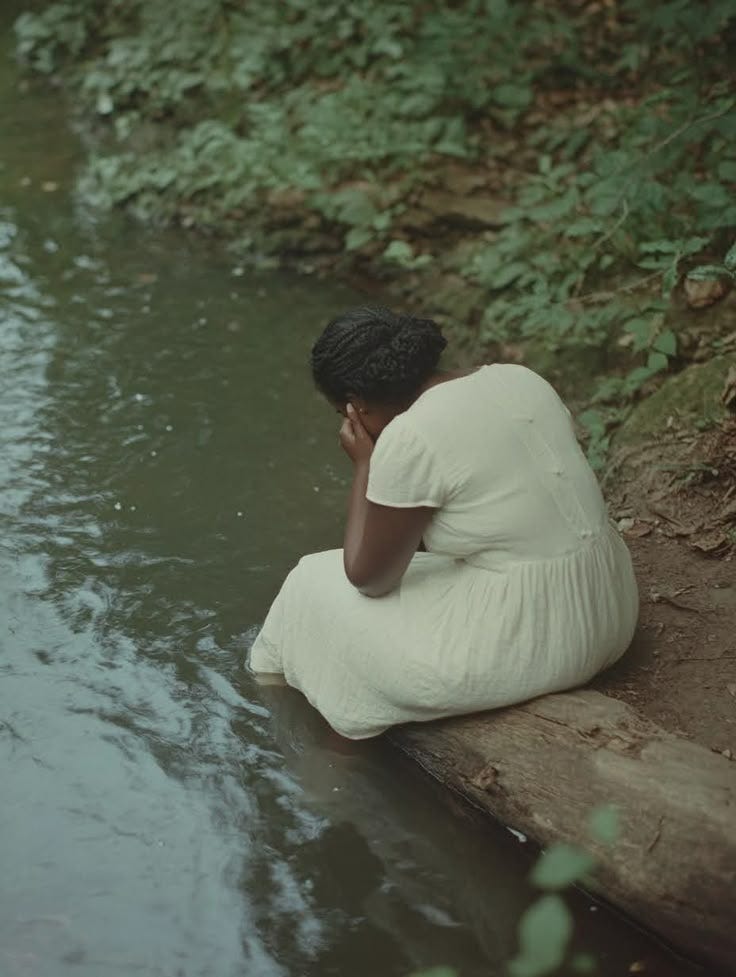
Not because women aren’t clear — but because men are taught that desire is pursuit, persistence is flattering, and restraint is optional.
They push boundaries.
They test limits.
And when it’s over, they get to move on: untouched, unexamined, and unchanged.
Because the price of their entitlement is paid in our fear, our vigilance, and our humanity.
This is the cost of pretty.
Constant Reminders Everywhere
News cycles and social media timelines are flooded with coverage of the Epstein files.
For some men, it’s an opportunity — a chance to publicly condemn behavior they don’t want to be associated with. A way to say, “I am not that guy.”
But for many women, this is more than news.
It’s a reminder.
Epstein didn’t invent this type of violence. He didn’t create entitlement, exploitation, or silence.
He just had the power and resources to exploit something women have been navigating long before his name became public.
What’s more unsettling than the crimes themselves is how comfortable we are condemning harm when it’s distant, and how quiet we become when it’s close.
When the abuser is a headline, outrage is easy.
When the woman is someone you know, neutrality suddenly feels acceptable.
Showing Up When it Matters
Neutrality is NOT passive. It’s a choice, and one that protects proximity, comfort, and reputation.
And, it becomes especially dangerous when it comes from people who publicly align themselves with values that condemn this behavior.
Posting is easy.
Retweeting is easy.
Condemning harm when the villain is already decided is easy.
What’s harder is responding with care when harm interrupts your real life — your friendships, your relationships, or your self-image as “a good guy.”
I learned this not through theory, but through proximity — by watching how quickly values collapse when accountability becomes inconvenient.
It’s one thing to condemn exploitation online.
It’s another to show up when a woman says, “I wasn’t okay.”
What accountability actually looks like
Accountability doesn’t require heroics. It requires acknowledgement.
Believing before questioning.
Responding instead of retreating.
Choosing care even when it costs comfort.
This isn’t a call for men to be perfect. It’s a call for them to be present — offline, in real life, when it matters.
Silence is not neutral when harm is close.
Reposts don’t replace responsibility.
You don’t get to condemn exploitation online and disappear when it shows up in real life.
UnPRETTY Me, Please! is not about taking beauty away from women.
It’s about taking entitlement away from those who have never had to carry the consequences.
Because until accountability lives offline, beauty will always to feel like a liability.
Moving Forward
For generations, women have been told to adjust:
Cover up.
Be careful.
Don’t provoke.
So we shrink, strategize, and survive; all while being told this is the price of being beautiful.
UnPRETTY Me, Please! is not surrender.
It’s a refusal.
A refusal to believe that womanhood must come with fear.
A refusal to keep teaching girls how to endure instead of teaching boys how to behave.
Pretty was never the problem.
Silence was.