

Topical's CEO Olamide Olowe: Brains, Branding & Becoming
How the 26-year-old founder turned personal pain points into a science-backed, culture-shifting skincare brand redefining beauty for a new generation.

At 27, the Nigerian-American founder and CEO of Topicals, Olamide Olowe, shows exactly how far a young Black woman can go when she trusts her vision — and reshapes an entire industry along the way.
“We make skin care for chronic skin conditions and we’re on a mission to transform the way people feel about skin through effective products and mental health advocacy,” Olowe said in an exclusive interview with Female Startup Club.
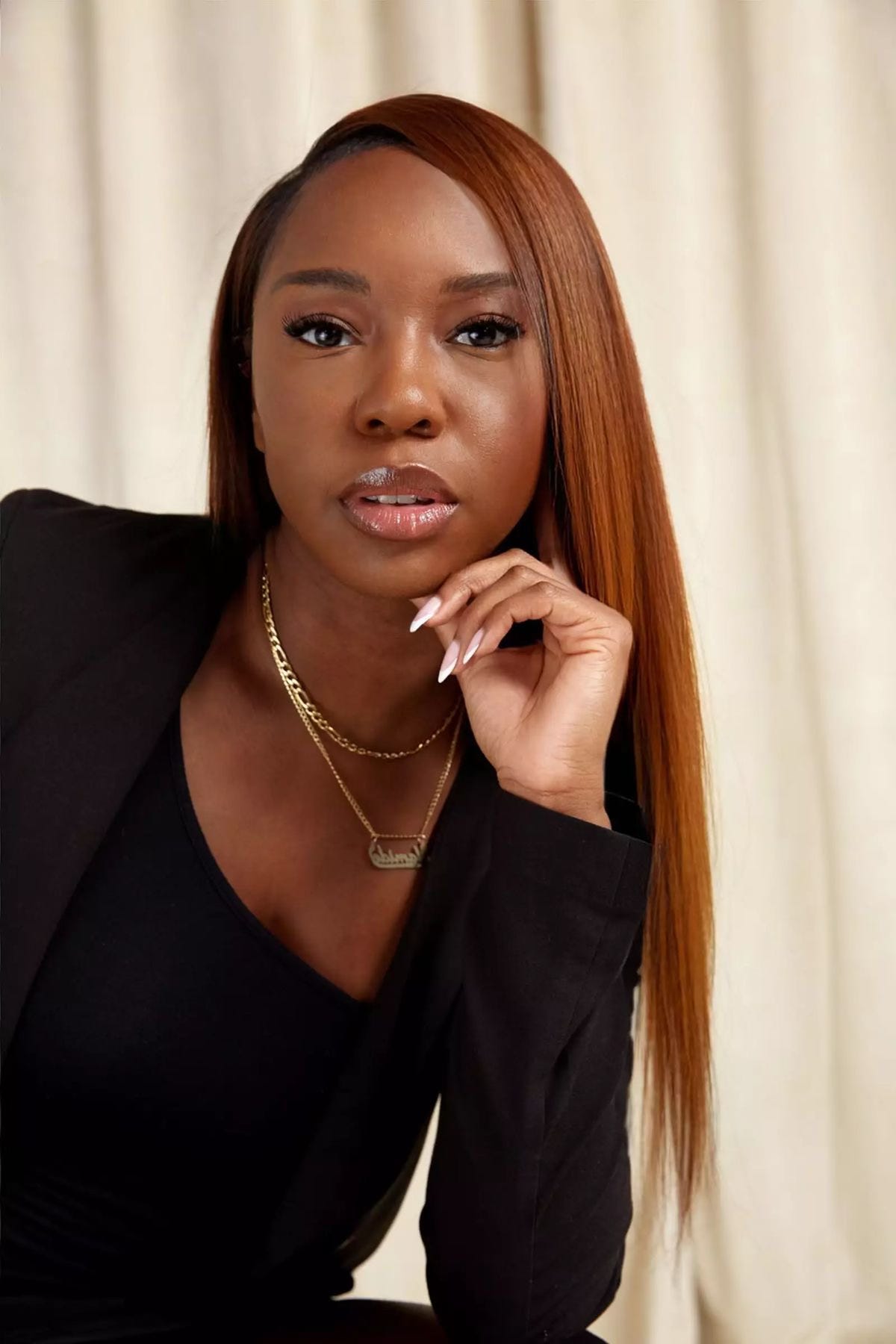
It’s no secret that beauty and skincare brands have historically overlooked melanated skin in their formulas. That gap has made it harder for women of color — especially Black women — to find products that support clear, consistent, and well-managed skin.
As the daughter of a doctor — and someone who struggled with hyperpigmentation and post barbae folliculitis, an acne-like reaction to shaving — Olowe naturally became curious about the science behind skincare. For years, she imagined following the family path and eventually running a medical clinic, which led her to pursue a pre-med track at UCLA on a full-ride track and field scholarship. But juggling athletics, academics, and the long hours spent shadowing doctors eventually proved overwhelming. Slowly, the plan she thought she’d follow began to shift. What started as curiosity was becoming something else entirely — an early pull toward entrepreneurship.
Her journey to launching Topicals, a science-backed brand, began in 2018, when she started raising money for the brand — which now generates between $20M and $30M in annual revenue. The following year, she met her future business partner, Claudia Teng, who had dealt with severe eczema for most of her life.
While working as a dermatology clinical research assistant, Teng noticed a glaring issue: none of the patients enrolled in the clinical trials she assisted with were Black. Without diverse clinical testing, treatments weren’t being developed or validated for darker complexions.
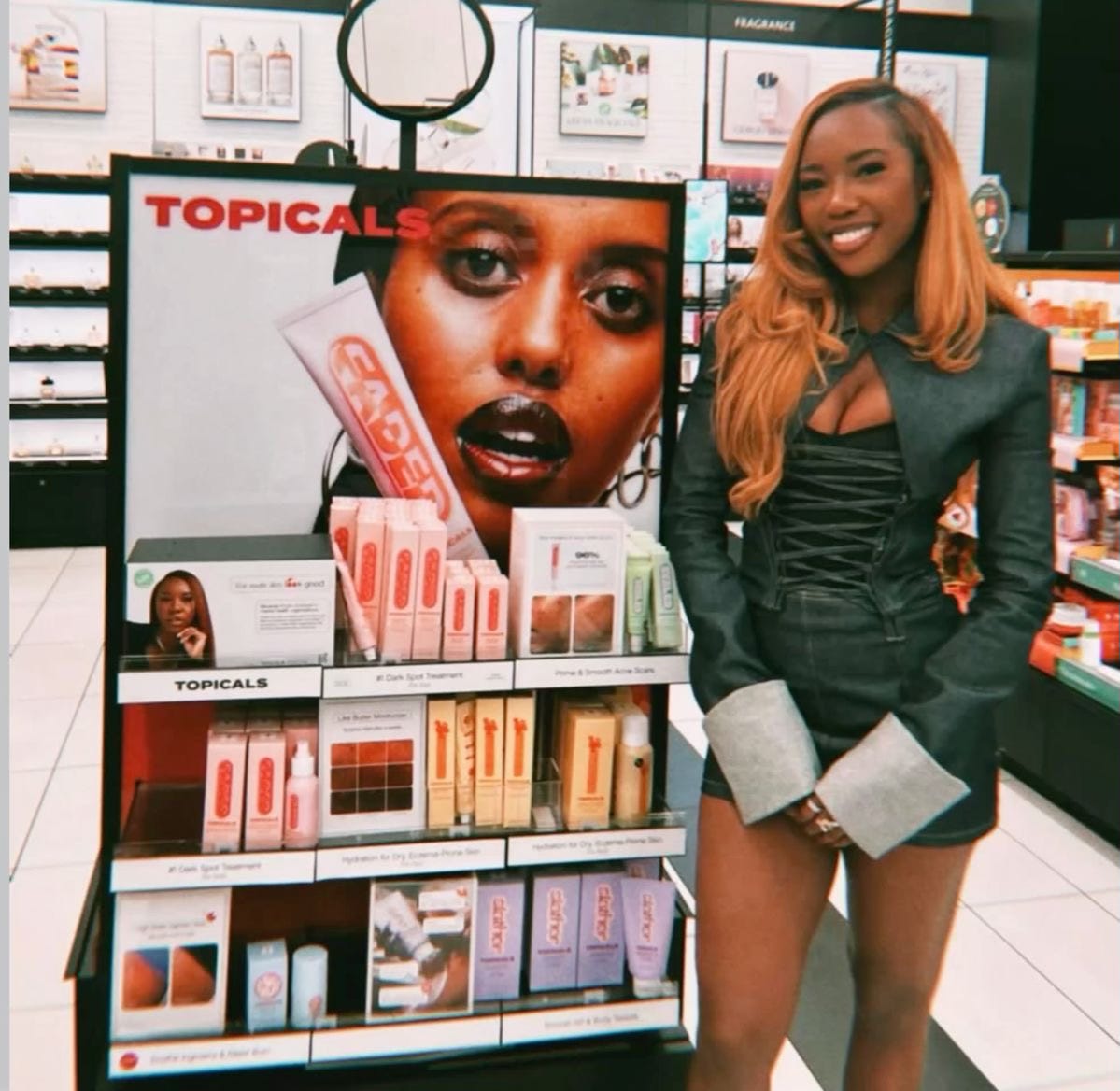
In 2019, the pair decided to step away from medical school — the path they once expected to follow — and instead build a skincare line that centered underrepresented groups with chronic skin conditions, people whose needs had long been overlooked.
From the beginning, Olowe and Teng knew they didn’t want Topicals to look or sound like the sterile, clinical brands dominating dermatology aisles. Instead, they built a brand that felt young, bright, and unmistakably Gen Z — bold colors, playful copy, pop-culture fluency, and an unapologetic emphasis on mental health. Topicals wasn’t created to fix “flaws,” but to make treating skin conditions feel less isolating and more joyful.
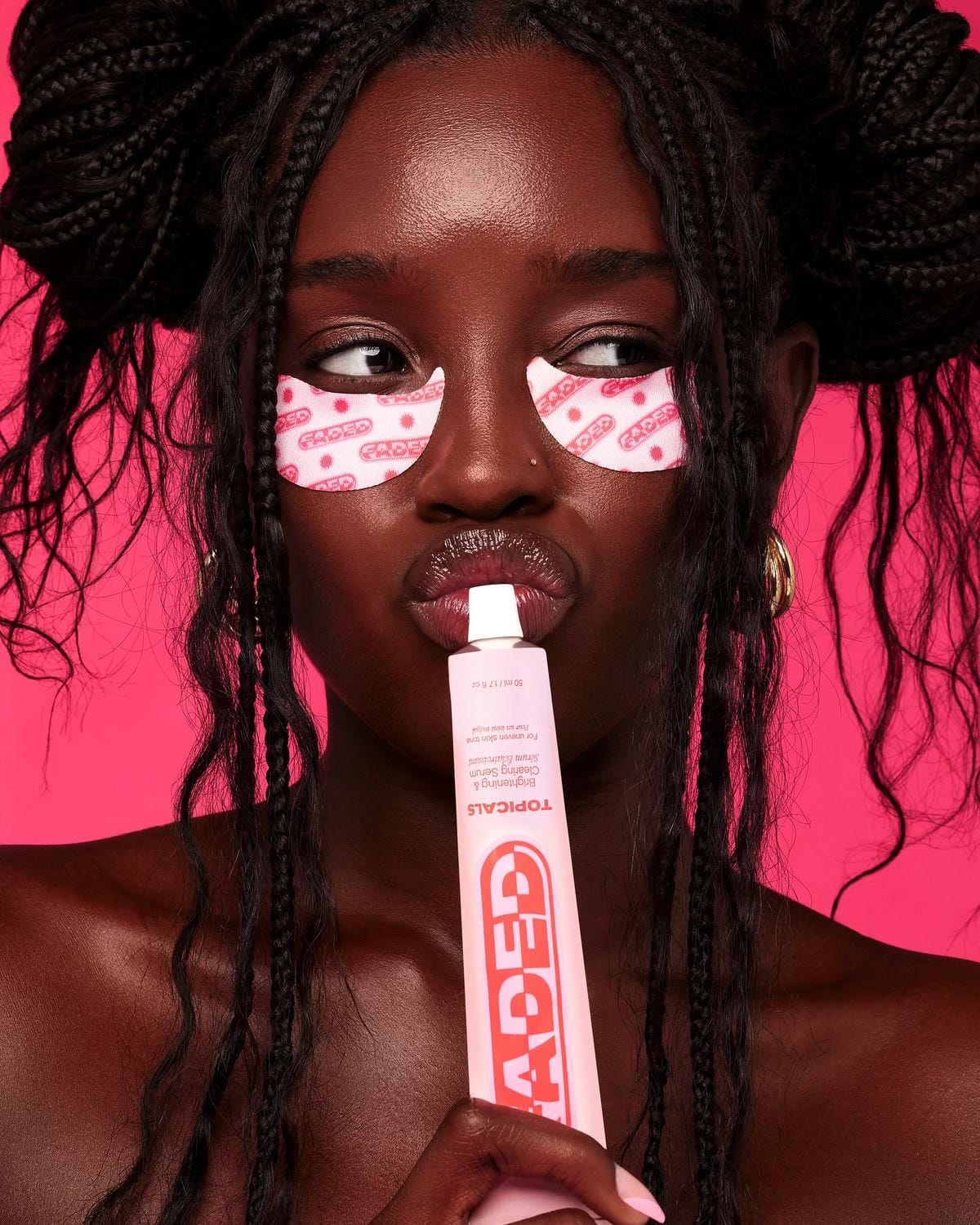
Their marketing quickly became a case study in how to build community. Memes, nostalgic graphics, and internet-native humor helped Topicals speak the language of the very consumers the beauty industry often ignored. And instead of centering perfection, the brand put real skin — textured, hyperpigmented, inflamed, healing — at the forefront.
Topicals also made a deliberate choice to tie beauty to emotional wellness. A percentage of the brand’s profits goes toward mental health organizations that support communities of color — a decision rooted in their belief that chronic skin conditions affect more than just the surface. By addressing both, the brand positioned itself as more than a product line; it became a form of care.
Topicals broke through because it speaks the language of a new generation — honest, inclusive, science-first, and fun. And at the center of it all is Olamide Olowe, rewriting what leadership in beauty looks like. Her story lands like a reminder to every young Black woman: the dream doesn’t have to stay aspirational. It can be built, branded, and brought to life — just like she did.