

It Really Is That Phone!
The device in your pocket might be more powerful—and more draining—than you realize.

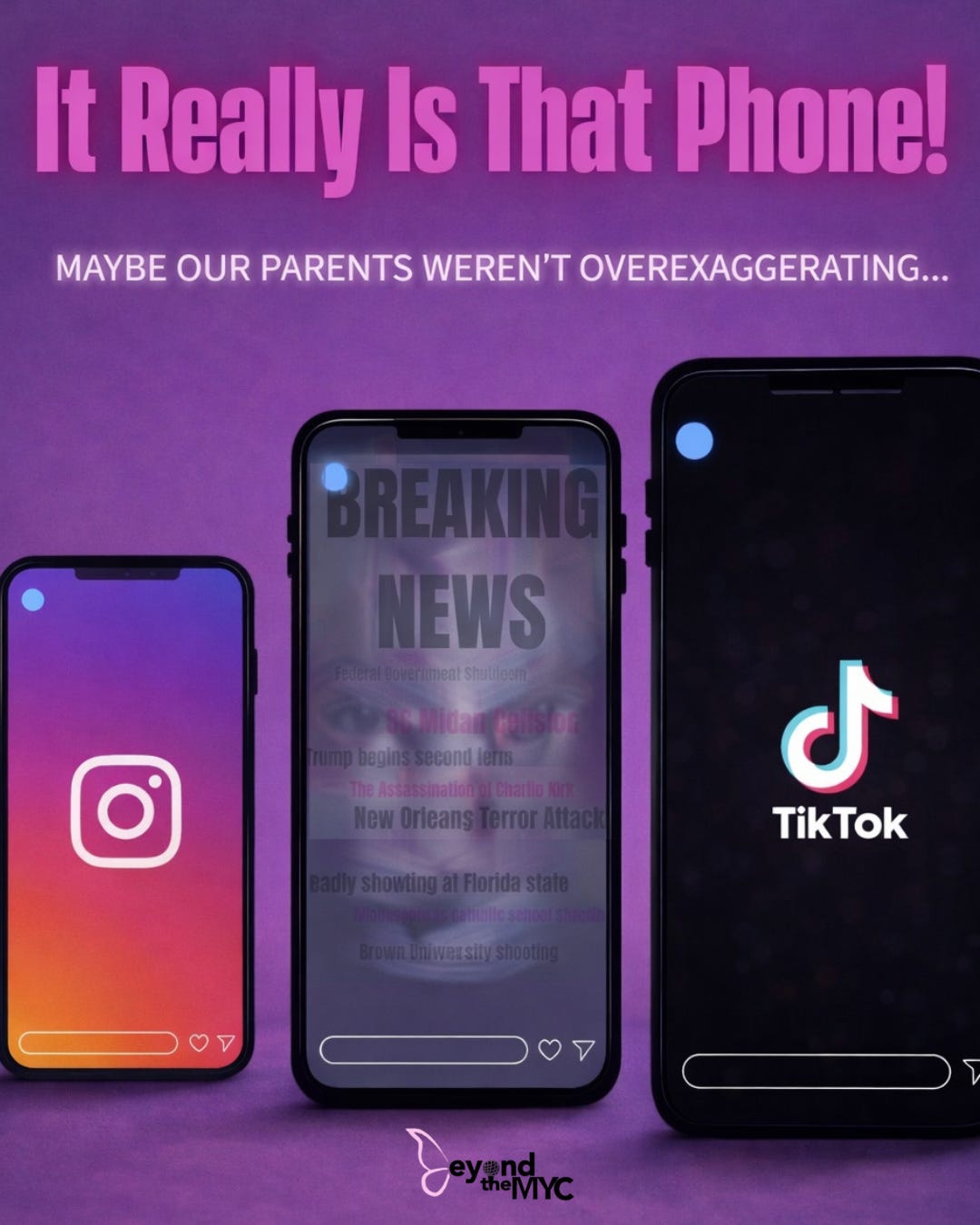
The older I get, the more I realize our parents were right — it really is that phone.
Growing up, I brushed off my mom’s constant reminders to put it down, always insisting she was just being old-school. At the time, her comments felt less like concern and more like nagging — something easy to ignore.
But when you take a step back and really look at it, it becomes harder to dismiss. Not because of generational differences or personal opinions, but because the research confirms what many of us didn’t want to hear.
Screen use has increased steadily over the past decade, especially among teens and young adults. Recent studies by the Pew Research Center revealed that about 46 percent of U.S. teens report being online “almost constantly,” while roughly 63 percent of adults ages 18 to 29 say the same.
We live in a digital environment where information is always available and always updating. Social media platforms, news apps, and video feeds are intentionally designed to keep us scrolling, making it easy for ten minutes on your phone to turn into an hour before you know it.
What once felt like occasional entertainment has become a near-constant presence in daily life, shaping how we process news, relate to others and even regulate our emotions.
I think about how different things felt when I was younger. Even though I had a phone, I didn’t spend nearly as much time on it as I do now. I read books, painted and played outside. That isn’t to say kids don’t still do those things today, but we’re also living in an era of “iPad kids” — where screens are introduced earlier and used more often, making constant digital engagement feel normal. But normal doesn’t always mean healthy.
Over time, that constant exposure starts to show up in how we feel — especially for teens and young adults, who are in a sensitive stage developmentally. According to mental health professionals at Relief Mental Health, frequent social media use is associated with increased stress and anxiety, in part because the brain is required to process a rapid stream of emotionally charged information without meaningful breaks.
This can lead to social comparison, mood swings, anxiety, depression and sleep disruptions. One behavior that has received growing attention in recent years is doomscrolling, a term used to describe the repeated consumption of negative or distressing news content online.
Honestly, getting caught in a loop of negative news is easy, especially because news outlets and media platforms know that negativity grabs attention. During times of uncertainty, it’s natural to dig deeper, trying to stay informed and understand potential risks. I know I’m guilty of it myself — it feels important to know what’s happening around you. But we also have to prioritize our health.
According to experts at Harvard Health, doomscrolling doesn’t just affect your mind; it can take a physical toll too, causing symptoms like nausea, headaches, muscle tension, neck and shoulder pain, low appetite, difficulty sleeping and even elevated blood pressure.
Recognizing these patterns isn’t about blaming anyone for habits that are practically built into the design of our phones and apps. It’s about understanding how constant connectivity shapes our minds and making intentional choices about how we engage with it. Set limits on how long you spend on your phone or certain apps. If scrolling makes you compare yourself to others, consider unfollowing accounts that bring you down. Taking occasional digital detoxes or just being aware of how long you’re scrolling can help too. Small changes like these make it easier to stay connected without letting your phone take over.
Our parents might not have had words like doomscrolling or digital overload, but they weren’t wrong. Constant exposure really does change us. The phone is that powerful. Now the challenge is learning to use it in ways that actually work for us and our mental health.