

5 Black Women Who Mastered the Art of Becoming
Five women, five stories, one truth: becoming looks different on all of us.

From the outside looking in, it’s easy to define becoming as a single moment. But it’s crafted through a lifetime of choosing yourself, again and again, even when the world asks you to shrink. It’s the boldness of leaving home before you have a plan, the courage to rebuild after loss, the audacity to turn awkwardness into empire, the vision to pivot from one dream into another, and the discipline to fly toward horizons no one believed you could touch.
These five Black women prove there is no one way to rise. From a teenager leaving Barbados to become a global mogul, to a YouTube storyteller turned studio head; from a grieving mother who rebuilt her life at the top of global brands, to a nurse-turned-artist shaping pop culture’s most iconic visuals; and the first Black woman to ever fly for the U.S. Air Force — these are the stories of becoming in motion, on their own terms.
Becoming the First to Touch the Sky
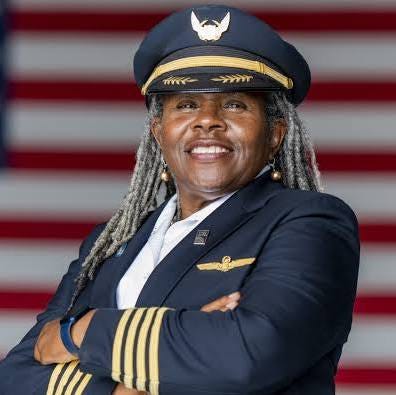
Before Theresa Claiborne ever stepped into a cockpit, she was a young Black girl with big curiosity and a sense that her life could stretch further than what she saw around her. Growing up, she’d never heard of a Black woman pilot, almost no one did. But she had discipline, confidence, and the belief that she could try things that weren’t expected of her and succeed.
That belief followed her into Air Force ROTC in college, where she flew a plane for the very first time. She had no flying experience, almost didn’t meet the height requirement, and trained alongside students who had been preparing for years. But she kept showing up. She studied, practiced, listened, and pushed herself past every moment of doubt. In 1982, that persistence made her the first Black woman to pilot an aircraft for the U.S. Air Force.
Her career took her from military tankers to teaching new pilots to becoming a United Airlines captain, flying passengers across the world. But one of her greatest contributions is what she built for the girls coming behind her. In 2016, she co-founded Sisters of the Skies, an organization that mentors young Black girls, exposes them to aviation early, and helps them see flying as something they can do — not just something meant for other people.
Theresa Claiborne’s story shows that becoming isn’t about having the perfect start. It’s about trusting yourself enough to begin. She opened a path where there wasn’t one, and because of her, the next generation will never have to wonder whether they belong in the sky.
Becoming a Beauty Founder Who Turned Cultural Influence Into Ownership
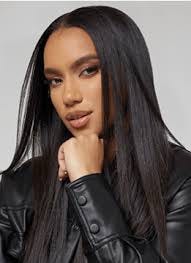
Rachel James has always had an eye for beauty. Not the loud kind, but the thoughtful kind in color, detail, finish, and the small touches that make something feel complete. As she moved through fashion merchandising and beauty school, she noticed something about the nail world: Black women were the culture, the creativity, the trendsetters — but they weren’t often the ones owning the luxury brands or creating the products behind the scenes. The artistry was there, but the ownership wasn’t.
So she decided to change that. In 2012, Rachel launched Pear Nova, a vegan, high-quality nail-care brand inspired by fashion, comfort, and inclusive shade ranges. She learned the science, mixed formulas herself, and built a company that took nail care seriously — not as an add-on, but as a core part of beauty. Her brand grew from an idea to a full salon in Chicago, editorial features, and a reputation for products that actually work on deeper skin tones.
Rachel’s becoming didn’t require a dramatic pivot. It came from trusting her taste, respecting her craft, and realizing she didn’t need permission to build something that reflected her experience. Today, Pear Nova stands as proof that Black women belong in every part of the beauty industry — behind the brush, behind the chair, and behind the brand.
Rachel James shows that becoming can be practical, steady, and intentional. Sometimes it’s simply seeing a gap, knowing you can fill it, and choosing to move forward anyway.
Becoming the Storyteller Who Made Space for All of Us
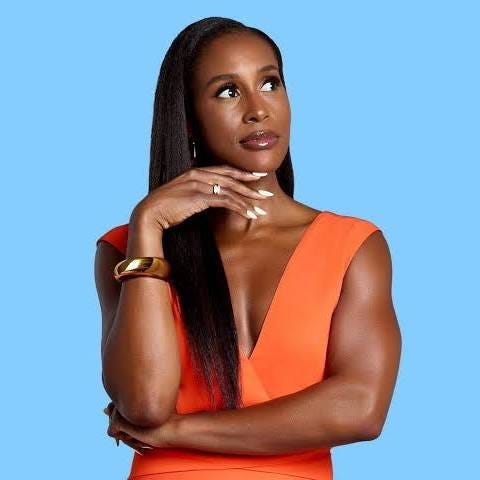
Most people know Issa Rae today as a producer, actress, entrepreneur, and the creative mind behind Insecure. They know the red carpets, the studio deals, the Emmy nominations, and the brand partnerships. But many don’t realize that Issa is also a Stanford University graduate who built her career long before Hollywood ever learned her name
.
Before she was a household name, she was simply our Awkward Black Girl — writing, filming, editing, and uploading episodes in between working full-time and trying to make rent. She created her web series because she didn’t see the stories she wanted to tell reflected anywhere. She didn’t have a budget, a team, or industry connections. What she had was honesty, a point of view, and the willingness to start where she was.
The success of Awkward Black Girl led her to HBO, where she co-created and starred in Insecure — a show that shifted television and centered Black women with nuance, humor, and cultural accuracy. As her influence expanded, she built Hoorae Media, a multi-platform production company dedicated to developing and amplifying diverse voices in film, TV, music, audio, and digital content. Through Hoorae, Issa has produced new storytellers, new series, and new creative ecosystems — proving she isn’t just a star; she’s creating pipelines for the next generation.
Issa Rae’s journey reminds us that becoming doesn’t always look like early fame or overnight discovery. Sometimes it looks like creating your own lane, trusting your voice before anyone else does, and letting the world catch up when it’s time.
Becoming the Woman Who Rewrote What Leadership Looks Like
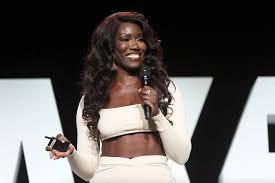
Bozoma Saint John didn’t enter the marketing world with a perfect plan or a straight path. She started with curiosity, a degree in English and African American Studies from Wesleyan University, and the determination to build a career that felt meaningful — even when the industry didn’t always reflect her. Her early jobs were small, behind the scenes, and far from the roles she’s known for today. But each step gave her experience, confidence, and a clearer sense of the kind of leader she wanted to become.
As she moved through advertising, music marketing, and brand strategy, her perspective set her apart. She understood culture, she understood people, and she wasn’t afraid to bring that understanding into rooms where she was often the only Black woman. That combination took her from PepsiCo to Apple Music, where her keynote appearance introduced her to millions, and eventually to leading major teams at Uber and Endeavor. In 2020, she became Chief Marketing Officer at Netflix, one of the highest-ranking marketing roles in global entertainment and tech.
Her story reached an even wider audience through On Brand with Jimmy Fallon, where she spoke openly about grief, ambition, creativity, and what it means to lead without losing yourself. But long before the cameras and the C-suite titles, her career was built on something far simpler: showing up, doing the work, and refusing to make herself smaller to fit the spaces she wanted to grow in.
Bozoma Saint John’s journey is a reminder that becoming isn’t about having the perfect résumé from the start. It’s about being willing to start where you are, trust what you bring to the table, and grow into the role you once wondered if you’d ever reach.
Becoming the Woman Who Expanded What Was Possible
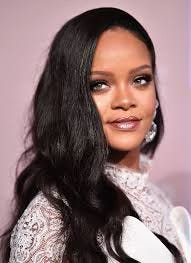
Before the world knew her as a global icon, Rihanna was a girl from Barbados with a big voice and bigger dreams. She left home before finishing high school, took a chance on an audition, and stepped into an industry where young Black Caribbean girls weren’t often given the space to lead. Nothing about her path was guaranteed — but she trusted her talent, her work ethic, and her ability to grow into each new version of herself.
Her rise in music was fast, but her becoming didn’t stop there. As she toured, performed, and topped charts, Rihanna paid attention to the world around her. She noticed who was included and who wasn’t, what stories were centered and what gaps were being ignored. Instead of waiting for someone else to fix those gaps, she built what she didn’t see: Fenty Beauty, a brand that changed the beauty landscape overnight with its inclusive shade range; Savage X Fenty, a lingerie line rooted in confidence instead of comparison; and Fenty, her historic fashion partnership with LVMH.
Each venture wasn’t just about business — it was about impact. It was about making sure that people who looked like her, who looked like us, saw themselves reflected in places that once felt closed off. Rihanna’s becoming has always been rooted in expansion: taking what she already had, learning what she didn’t know yet, and choosing to evolve publicly, boldly, and without apology.
Today, she’s a mother, a mogul, an artist, and a visionary. But none of those titles tell the full story. Rihanna became by trusting that the life she wanted was bigger than the life she came from. She is proving, step by step, that young women from small islands can grow into forces that shift the world.
Becoming is Ongoing
Together, these women remind us that becoming isn’t a destination. It’s a series of choices, risks, and moments where you bet on yourself even when no one is watching.
Theresa Claiborne, Rachel James, Issa Rae, Bozoma Saint John, and Rihanna each started in different places, with different resources and different paths, but they all grew by trusting their instincts and refusing to limit their ambition.
Their stories show that greatness isn’t reserved for perfect beginnings or traditional timelines. It belongs to anyone willing to learn, evolve, and step into the version of themselves they haven’t met yet.
Becoming is personal. Becoming is ongoing. And for every woman reading this, your story is still unfolding — and it’s already worth telling.